Festival volunteer
Welcome visitors, help stallholders, share the festival online and more, on the day or in the weeks before and after it. Ages 15 and over, no experience needed, sign up any time.
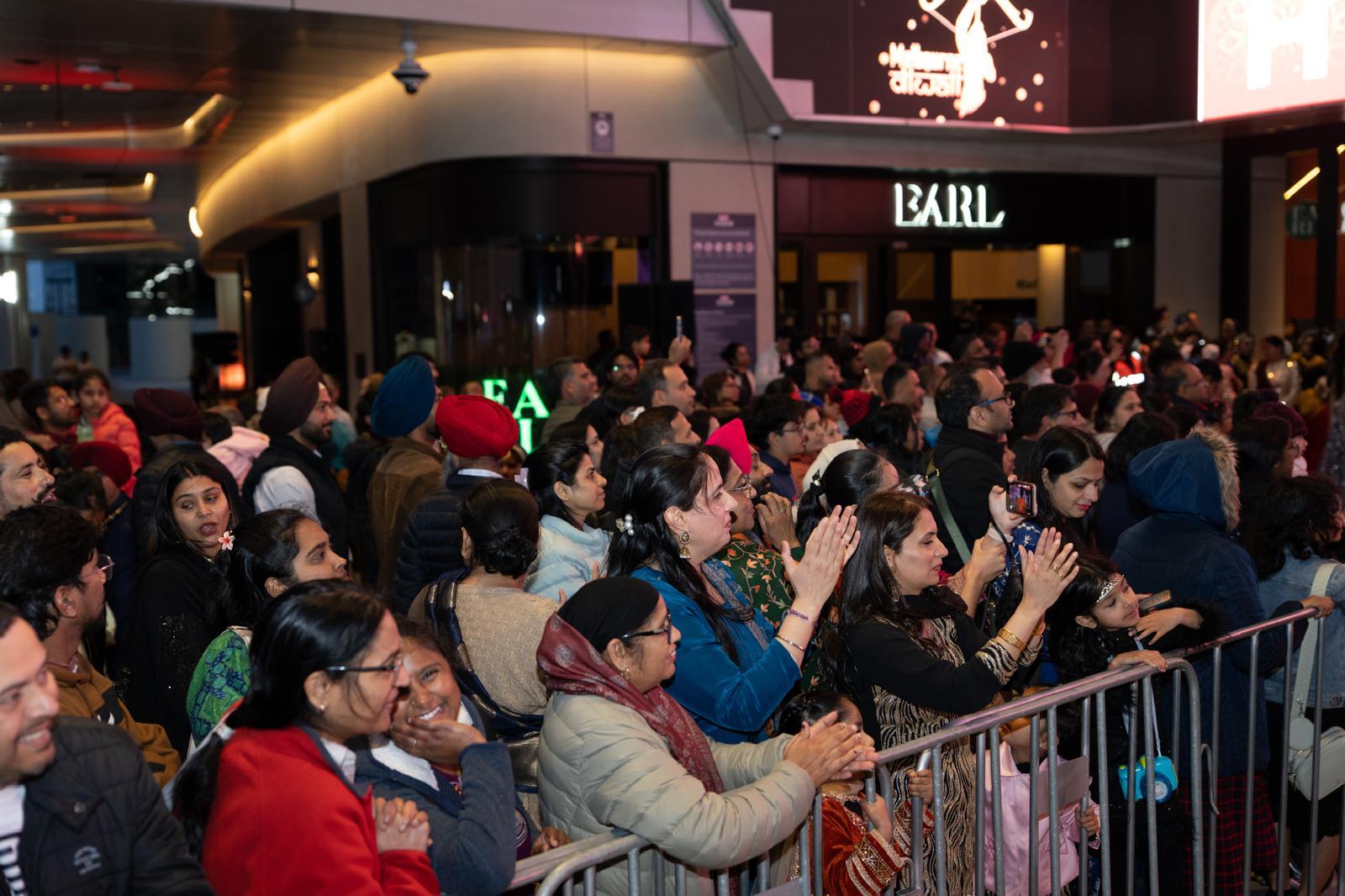
Volunteer and crew, Melbourne Diwali 2026
Give a few hours on the day, help in the weeks before and after it, or join the stage crew. Bring the skills you have, learn new ones, and be part of the festival from the inside.
Saturday 31 October 2026 · Marvel Stadium Square, Docklands
Two ways to get involved
Welcome visitors, help stallholders, share the festival online and more, on the day or in the weeks before and after it. Ages 15 and over, no experience needed, sign up any time.
Ten places on the performer team, moving 45 performing groups through a live programme. Five for experienced operators, five learning places. A Working with Children Clearance is required.
Why volunteer
Melbourne Diwali is a free community festival. More than 20,000 people came across the day in 2026, and volunteers are a big part of how a day like that happens.
Tell us what you want to learn, from running a large event to marketing, hospitality or stage production, and we will try to place you where you will grow.
Ask for a volunteer experience certificate recording your role and your hours. Useful for a resume, a course or your next job application.
Work alongside people from across Melbourne, of every background and age, and make friends you will see again next Diwali.
Where you could help
Tell us which areas interest you and we will match volunteers to roles as the plan for the day comes together.
Greet visitors, point the way and answer questions. Speaking a second language is a real help here.
Help stallholders settle in and keep the market running smoothly through the day.
Help run the activities families come for. These roles need a Working with Children Clearance.
Welcome partners and guests and help them get the most out of the day.
Capture the day in photos and video, if that is your thing.
Talk to visitors about their day, so next year's festival is even better.
Social media posts and outreach in the weeks before, set-up and pack-down, and thank-you posts after. Some of it from home.
Support the groups who bring the programme to life. The structured stage-crew places are described below.
About five minutes
One short form. It asks for your contact details and five things about you:
Your skills
Tick what you can bring. New to volunteering is an option too.
Your expertise
A few lines on your work, studies or anything you are good at.
What you want to learn
What you would like to get out of the day.
Your time
Hours on the festival day, and whether you can help before or after it.
Your certificate
Whether you would like a volunteer experience certificate.
The team reads every sign-up and will be in touch by email about roles and the volunteer briefing.
Stage crew
On Saturday 31 October, around 45 school and community groups, up to 380 performers, most of them school students, move through a single stage. Sets run four to six minutes, and the order will change on the day. At any moment three acts are in play: one performing, one waiting in the stage left wing, one being introduced. Five stations hold that together, and we are recruiting the person who runs each station and the person standing beside them.
These are operations roles. They are not performing roles and they are not media roles. If you want to run a changeover and be measured on it, read on.
Five places
For people who have worked live events, in any capacity, at any scale. You hold the radio, carry the call for your station, and teach the person beside you by letting them take on as much as they are ready for.
Five places
No experience needed. You stand beside an experienced operator all day and learn the station while it is live, with a written brief, induction and a site walkthrough, your hours recorded, a debrief and a written reference. Placement students welcome.
Each station carries the real call offsets it works to. T−15 means fifteen minutes before that act goes on. Open a station to read more.
You are the desk that knows who is actually on site. You work a printed grid, not a screen, and you feed the Stage Manager the one fact the running order depends on: which of the 45 groups has turned up. Without you the Stage Manager reshuffles blind.
What you take away: you have run accreditation for a 380-performer event and can explain why a paper fallback beats a device on a concourse.
What makes it hard
Groups arrive in clusters, out of order, with more people than the form said, and with a parent who wants to know where the toilets are. You will be asked to make exceptions all day, and the answer is usually no, said pleasantly, forty times.
Suits: Event Management, Entertainment Management, Applied Business
You own the room the performers wait in. You take the head count at the door and you keep it true, which means knowing when four dancers have wandered off to find their mum and getting them back before the runner arrives.
What you take away: you have marshalled hundreds of performers, most of them children, through a holding area on a live schedule.
What makes it hard
A holding area with sixty excited nine-year-olds in it is loud, and your job is to keep it calm without being the person who shouts. When the running order changes, you are the one who has to tell a group that has been ready for twenty minutes that they are now on later.
Suits: Event Management, Stage Management, Entertainment Management, creative production
Stage left is where acts go on, and it carries two people rather than one. With four to six minute sets, the introduction handover for one act overlaps the walk-up for the act before it. One person cannot do both without one of them slipping.
The pronunciation check is not a formality. You are the last person who can stop an MC mispronouncing the name of a group in front of a crowd, and the group's families are in it.
What you take away: you have run the on-stage side of a changeover, repeatedly, for an audience the venue contract caps at 5,000 people at any one time.
What makes it hard
You are working to two offsets at once, on radio, in a wing you cannot see the other side of. If you are thirty seconds late the act walks on unattended or walks on to a track that is not cued, and both are visible from the front.
Suits: Stage Management, Event Management, creative production
Acts come on from stage left and leave from stage right, and both happen in the same few seconds. This is the position that catches every act at its highest emotional point. Some are elated. Some are devastated. Some are eight years old and crying. Several will want to go back on for photographs.
You have about ninety seconds to move forty of them out of a wing while the next act is mid-set. The changeover is the single most-measured thing in running a live show, which is the reason to want this job.
What you take away: you have owned talent egress on a 45-act programme, which is the half of a changeover nobody watching ever notices and everybody notices when it fails.
What makes it hard
You cannot see stage left from where you stand, so everything runs on radio. If you fall behind, the programme starts losing a minute an act and it compounds. When that happens you escalate to the Stage Manager, never across to the other wing.
This is the station we staff first, because nobody else on the team can cover it. It is also the one where standing beside the operator teaches you the most, because you see the whole egress problem at close range.
Suits: Stage Management, Event Management, Entertainment Management
Everything goes up to the Stage Manager, never sideways to the other wing. Lost property, lost children and first aid belong to Marvel Stadium customer service and St John Ambulance.
Every stage-crew place works alongside performers under 18, so a current Victorian Clearance is required, with no exception for a one-day event. Volunteer applications are free at service.vic.gov.au/services/working-with-children. Interstate clearances do not count.
Travel and meals on the day are covered for stage crew. If what you actually need is paid work, say so in the form. There are paid roles across the production and it will not count against you.
One form, about ten minutes.
Stage crew figures are the approved festival numbers as at 25 August 2026. Clearance details were checked against Victorian government sources on 25 August 2026 and may change.
Good to know
Sign up today and bring a friend. Melbourne Diwali is made by the people who turn up for it.
Melbourne Diwali is run by SarasCare. Each form explains what we do with your details. Read our privacy policy.